


Start with Color, Then Look Closer
Use familiar clothes to compare a small accent. Cultural color references belong to specific objects; the color of a modern piece does not identify its material.
Read the guide ↗
The journal
Begin with a color, a form or a question. These short guides connect cultural reading with careful observation of a specific piece.
Read about color, design and material questions, then explore the related pieces.
Use familiar clothes to compare a small accent. Cultural color references belong to specific objects; the color of a modern piece does not identify its material.
Read the guide ↗
Observe form, spacing and attachment first. Then distinguish the image’s scope, the exact product information and any identified cultural subject.
Read the guide ↗
A color or shine can guide your taste. Material names, treatments and care need information for the exact selected piece, beyond a photograph or a historical comparison.
Read the guide ↗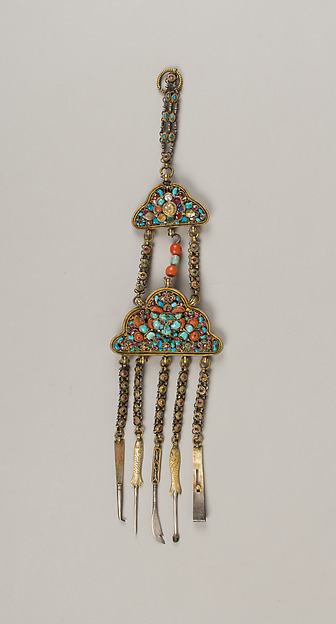
A Met museum object shows how a Tibetan-market belt hanging joined elaborate jewelry with small grooming tools—and why its Newari attribution matters.
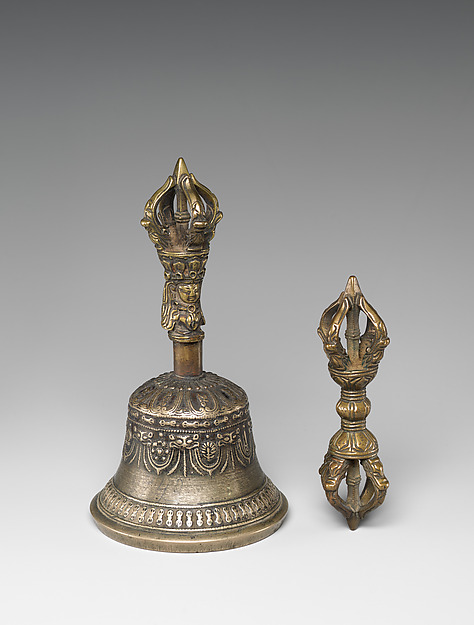
See how a Tibetan Buddhist vajra and bell work as a ritual pair, using a 19th-century museum object to read their forms and meaning with care.
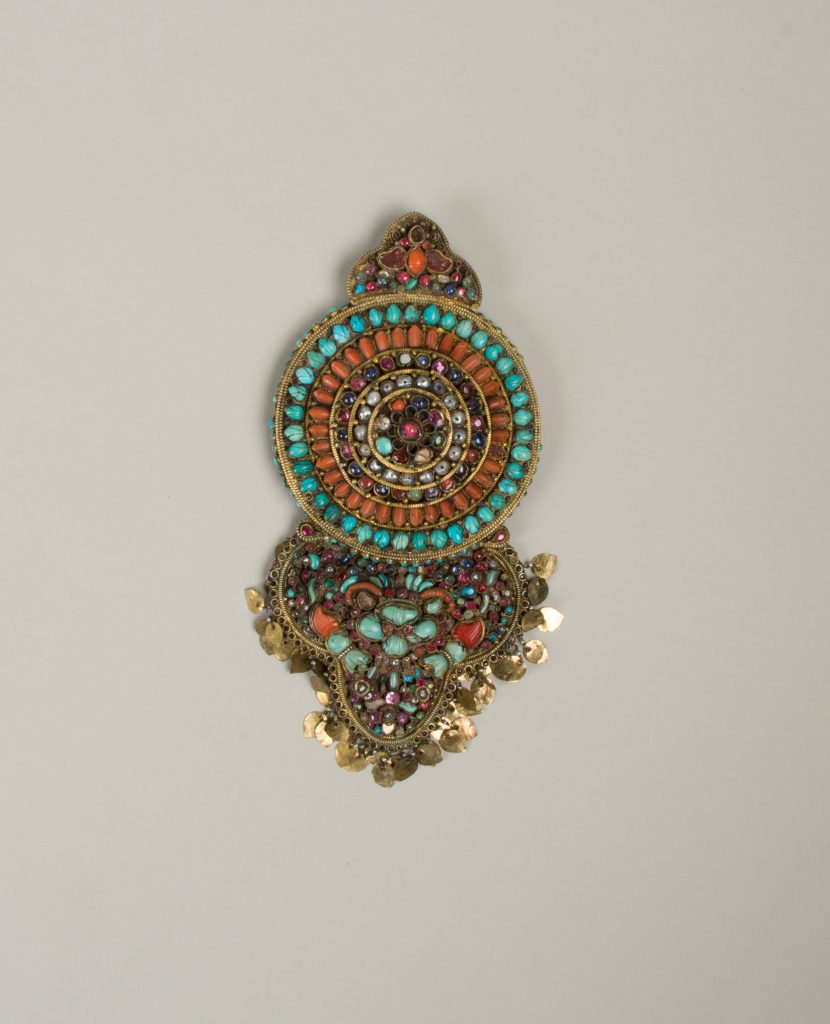
A Met collection earring shows why dimensions, materials, and uncertainty in museum labels matter when looking at Tibetan-inspired accessories today.
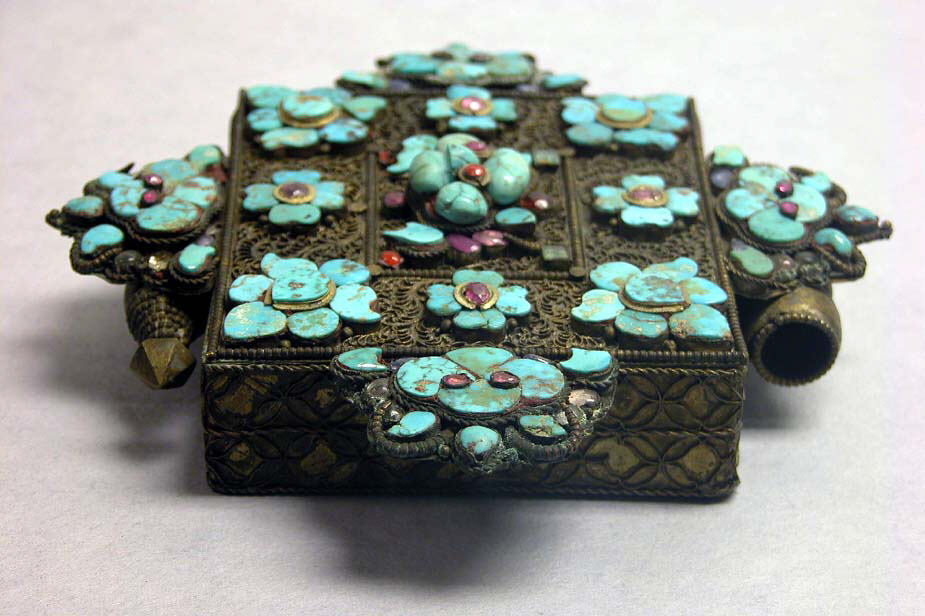
A Tibetan gau can be worn, yet its role depends on its contents and religious context. Compare museum records and learn what a gau-inspired accessory cannot prove.

Why do some Tibetan prayer beads have 108 beads while shorter strands differ? Two Rubin Museum objects show why count, material, and context should be read together.

What does the endless knot mean in Tibetan art? Read documented museum examples and learn why a motif alone cannot establish a modern accessory's origin or effect.
Visiting Gateway to Himalayan Art in Pasadena? Use three questions to look closely at symbols, materials, and living traditions—with context.

Diagram labels: knot · separated spacer · cord through the bead opening · exit toward the next bead.
The cutaway illustration separates components to show one continuous cord passing through the bead openings. It is a schematic explanation, not the interior of an actual product.
Look closer ↗